Guadalest is one of the most recognisable places in inland Alicante. Its castle, historic centre, views and elevated position make it an immediate reference point for anyone drawn to landscape, authenticity and a quieter way of life in inland Costa Blanca.
Yet when someone begins looking at a house near Guadalest, the question is rarely geographical alone. It is not simply about being close to a familiar name. It is about understanding whether the wider setting can support a slower residential experience, one that is more open to the landscape and more closely connected to the home itself.
For many buyers, particularly those arriving from cities, denser coastal areas or other European countries, the appeal lies in a combination that is increasingly difficult to find: nature, privacy, land, views, calm and a practical relationship with everyday life.
This guide considers the questions worth asking before choosing a home in the surroundings of Guadalest.
What does living near Guadalest really mean?
Living near Guadalest does not necessarily mean living within the village’s historic centre. That distinction matters.
To a visitor, Guadalest often means the castle, viewpoints, familiar streets and a few hours of sightseeing. A home buyer usually looks at a wider area: Guadalest Valley, neighbouring villages, lower-density residential settings and properties with a quieter relationship to the landscape.
Someone searching for a house near Guadalest is generally looking for more than proximity. They are looking for a feeling: waking to a broader horizon, spending time on their own land, enjoying natural light, welcoming guests without haste and experiencing the outdoor space as part of the home.
“Near Guadalest” is therefore best understood as a way of living rather than a point on a map. Its value lies in the residential experience the setting can provide.
Are Guadalest village and the wider valley the same thing?
No. Guadalest village and the surrounding valley offer different experiences.
The historic centre has a distinctive identity. It is memorable, culturally significant and visibly shaped by tourism. It works beautifully as a place to visit and as a landmark within the landscape, but it may not provide everything sought by a buyer who values privacy, land, a garden, quiet and an everyday connection with the outdoors.
The wider Guadalest Valley offers another perspective. Life can feel more open, residential and less conditioned by activity in the tourist centre. Privacy, orientation, neighbouring homes, access, use of the land and the way the landscape accompanies daily life all become more important.
This does not diminish the village. It places it in context: Guadalest may remain the emotional, cultural and visual reference, while the valley provides the residential experience many buyers are actually seeking.
Who is likely to value a house near Guadalest?
A house near Guadalest can suit different people, but they often share one intention: to live more calmly without giving up a home with character.
It may be a second home for longer escapes, a base for extended stays or a more permanent home for someone stepping away from an urban pace. It may also be somewhere to welcome family, work remotely or spend more of daily life outdoors.
This buyer is rarely looking for just any house. They want something less easily defined: a property with context, privacy, genuine usability and a sense of refuge. Attractive photographs are not enough; they want to imagine what living there would actually feel like.
When considering a home around Guadalest, it is therefore useful to think less about the first impression and more about the life the property could support.
What does Guadalest Valley offer compared with more urban areas?
Guadalest Valley has a relationship with the landscape that is hard to reproduce in denser or more urbanised parts of Costa Blanca.
The difference is not only quiet. It is visual openness, the presence of nature, a sense of space and the possibility that the home does not end at its walls. A property here can feel more open, more measured and more connected to its setting.
For many buyers this changes how the house is understood. The home becomes more than an interior: house, garden, terrace, land, views, light and quiet form part of the same decision.
Inland living will not suit everyone. Those who want constant urban activity or immediate access to every service may prefer another setting. For someone seeking calm, landscape and a more considered way of living, however, the surroundings of Guadalest can be particularly appealing.
Does calm mean being isolated?
Not necessarily. This is one of the central questions when assessing a home near Guadalest.
Calm should not be confused with isolation. A good residential location in inland Alicante needs to offer tranquillity while maintaining a reasonable relationship with everyday life. The aim is not to be far from everything, but to find a balance between privacy, setting and practicality.
A very isolated house may be inconvenient for certain uses. A very exposed one may lose the calm that drew the buyer inland. Between those extremes are homes that provide a slower atmosphere without creating a sense of disconnection.
The better question is not whether a property is “isolated” or “connected”, but how it is intended to be lived in. A weekend second home and a home for long stays do not require exactly the same things.
The right location is the one that supports the intended use of the property.
Why does the land change the experience so much?
With a house near Guadalest, the plot can be far more than a figure in the property details. It can reshape the whole experience of living there.
Land gives a home room to breathe. It can provide places to rest, receive guests, spend time outdoors, tend a garden, look towards the landscape or simply enjoy space around the house. Yet not every plot offers the same quality of use.
Its value is not only measured in square metres, but in how those metres work. A large plot may feel impractical if its usable areas are poorly connected to the house. A more contained plot can work very well when it provides privacy, comfortable areas and a natural relationship with the interior.
For a buyer looking for a house with land near Guadalest, the question is not simply “how much land is there?” but “how does that land support daily life?”
Good outdoor space should be walked, felt and imagined, not assessed from a number alone.
What role do landscape and natural light play in everyday life?
Landscape is one of the great attractions of the Guadalest area, but its residential value depends on how it relates to the home.
It is not only about a beautiful view from one particular point. What matters is whether the landscape is present in the spaces where life happens: the living room, kitchen, bedroom, terrace, garden and places to pause.
When the setting accompanies daily life, the house gains depth. Rooms feel more open, the outdoors becomes a natural presence and the sense of calm depends less on decoration or floor area.
Natural light reinforces that experience. A bright home can feel more welcoming, more spacious and more connected to the outdoors. The point is not brightness alone, but how light accompanies the important moments of the day.
Landscape and light must also coexist with privacy. A home can open towards its surroundings without feeling exposed. That balance between outlook, intimacy and everyday use is one of the most valuable qualities in a property near Guadalest Valley.
The landscape should not be merely a backdrop. It should help the house work better as a place to live.
What kind of calm is this buyer actually looking for?
For a discerning buyer, calm is rarely an empty absence of noise. It is a question of quality of life.
It can mean arriving home at a gentler pace, having breakfast without rushing, opening a window to a sense of space, or finding that a terrace invites time outdoors. It means independence without feeling enclosed and a home that makes room for rest, guests, reading, work and unstructured time.
This calm is emotional, but also practical. A place cannot rely on being attractive alone. The house must respond well to daily use and offer a coherent relationship between location, interior, exterior and landscape.
Living near Guadalest should therefore be seen not as an escape, but as a considered choice of setting.
What separates an attractive property from a home that lives well?
An attractive property may impress on a first visit. A home that lives well continues to make sense after you imagine real moments there.
The difference lies in details: how you arrive, move through the house and connect the living spaces with the outdoors; where light falls; which areas invite you to stay; how privacy feels; how the garden supports the home; and how the property might work during a longer stay.
A house near Guadalest may be visually refined, but its real residential value appears when location, land, outlook, light, privacy and layout support one another.
A careful buyer looks beyond the image and asks whether the property can sustain a way of life.
That is when a house stops being a photograph and starts becoming a place.
How should a home in the Guadalest area be assessed?
It should be considered calmly, without rushing.
Rather than looking for closed answers, a buyer can observe how the property feels in relation to its setting. A few questions help make daily life easier to imagine:
- Does the location allow the Guadalest area to be enjoyed at a calmer pace?
- Does the home invite time both indoors and outside?
- Does the landscape form a natural part of everyday experience?
- Does the land support a quieter, more open way of living?
- Does the relationship with the surroundings offer privacy without isolation?
- Is the house better suited to a second home, longer stays or a more permanent life?
- Can the outdoor areas be used comfortably and naturally?
- Does arriving home convey the calm sought in inland Alicante?
These questions are not intended to create unnecessary doubt. They help the buyer look more carefully and consider the property not only as a purchase, but as a possible setting for life.
How does Villa Las Higueras fit this way of living?
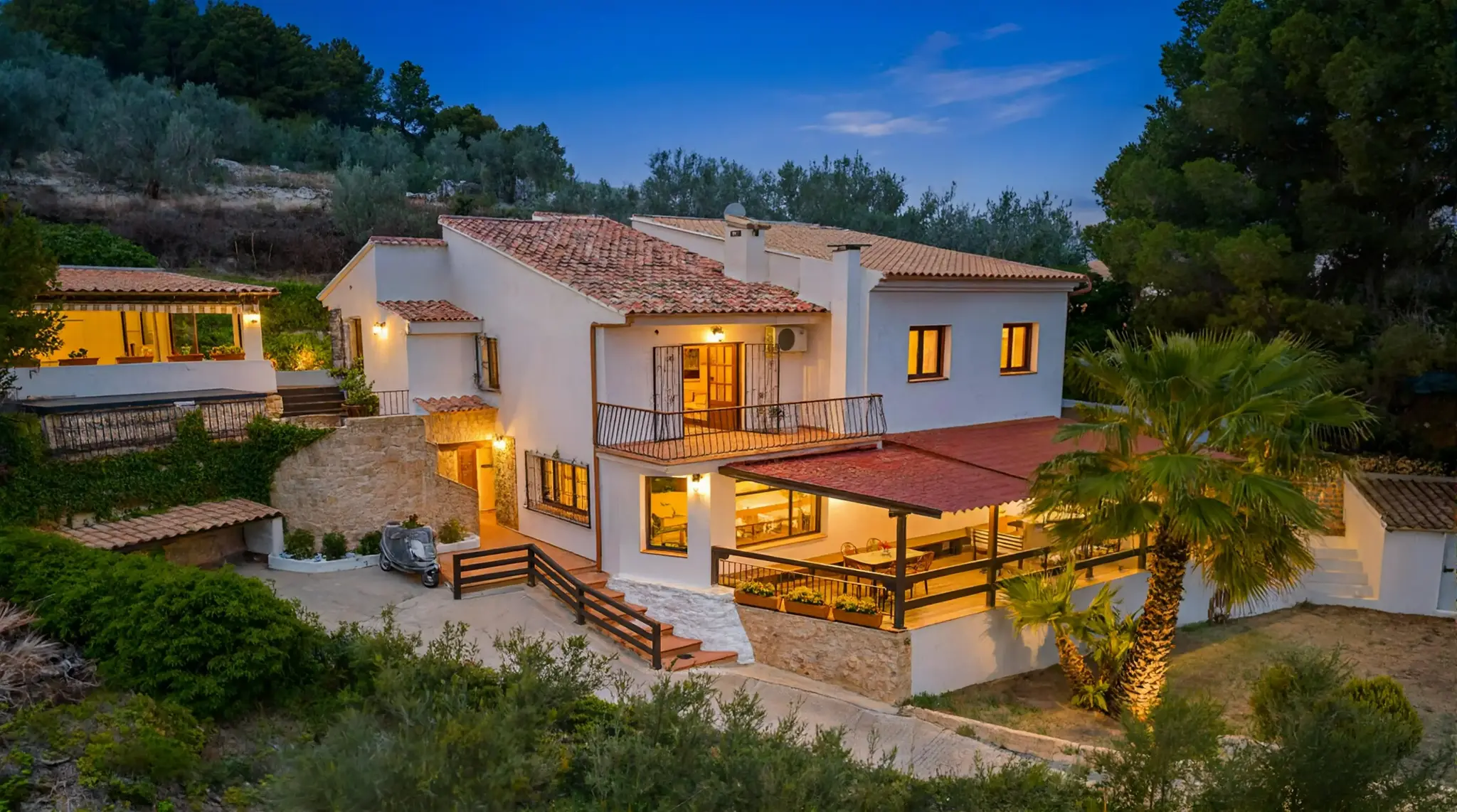
Villa Las Higueras can be understood through this reading of the area. It is not presented as a house in Guadalest’s tourist centre, but as a property whose relationship with Guadalest Valley, its land, privacy and everyday experience deserves careful consideration.
For someone seeking a house near Guadalest, the geographical reference is only one part of the decision. What matters is how the whole property feels: the arrival, the movement through the house, the connection between inside and outside, the role of the land, the presence of the landscape and the kind of calm it conveys.
This is a more demanding way to assess a home, but also a more honest one. It avoids relying on broad sales language and focuses on real criteria: setting, privacy, outdoor space, relationship with the landscape and daily use.
Villa Las Higueras does not need to be framed as an exaggerated promise. Its interest lies in being considered slowly, as a distinctive home in the surroundings of Guadalest Valley for someone looking for more than an attractive image.
How to compare the valley villages
No single village answers every residential use in the same way. Before choosing, it is useful to consider the role the home will have: short breaks, longer stays or more permanent living, as well as access, immediate surroundings, outdoor space and everyday travel needs.
To understand what living in Benimantell is like, look at the relationship between local identity and daily life. In Beniardá, the reservoir and village scale create a different experience. The Benifato and Aitana setting offers a more direct relationship with the mountains.
Conclusion
Living near Guadalest is not simply a matter of choosing a recognisable location. It means deciding what relationship you want with the landscape, privacy, outdoor space and the pace of life in inland Alicante.
Guadalest’s historic centre has its own identity. The valley and its residential surroundings offer another reading: quieter, more open and more closely linked to the daily life of a home with space of its own.
When considering a property near Guadalest, it is worth looking beyond the name. What matters is finding a home that makes the proximity meaningful through the calm it offers, the way its land can be lived in, its relationship with the landscape and the coherence between location and way of life.
_a8e2902b.webp)